Breogán and the Tower of Hercules

I am writing this from the living room of my cousin's friend's mom's house in a village in the province of Galicia. We're here for a New Year's Eve party my cousin was invited to. And I can't sleep. So to pass the time, I will tell you the story of Breogán and the story of the Tower of Hercules. These are local legends from Celtic and Greek mythology that I learned on a trip to A Coruña, a small coastal city a few hours away from where I am now. My cousin took me there a few days ago. She lives in Santiago de Compostela, and has been giving me a thorough tour of Galicia. We visited Ourense, Vigo, A Estrada, and Moaña, where I am now.
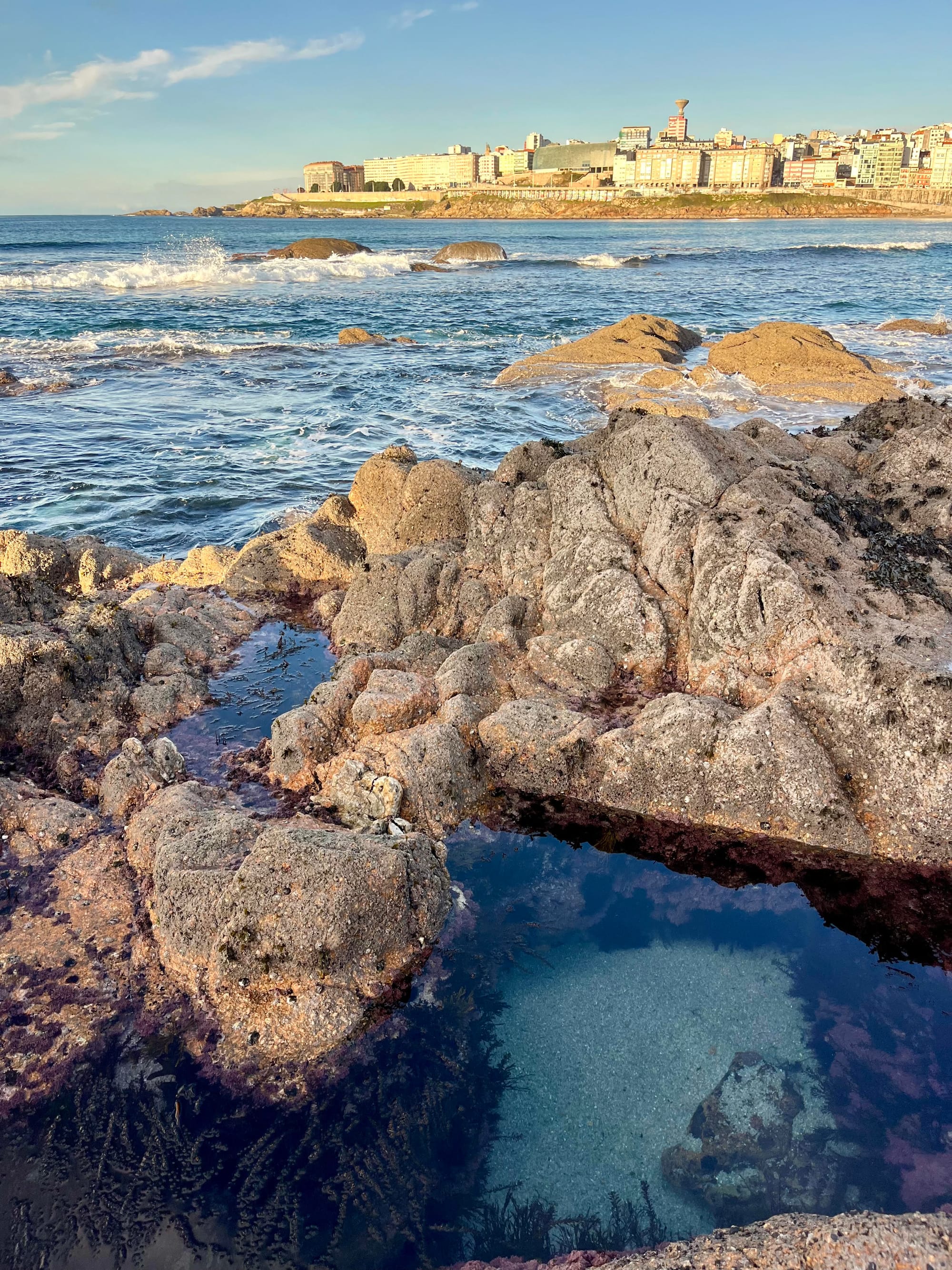
A Coruña is a small and pretty ordinary port city. Its main attractions are the Tower of Hercules, which will be the main subject of this post, and indescribably stunning views of the Atlantic coast.
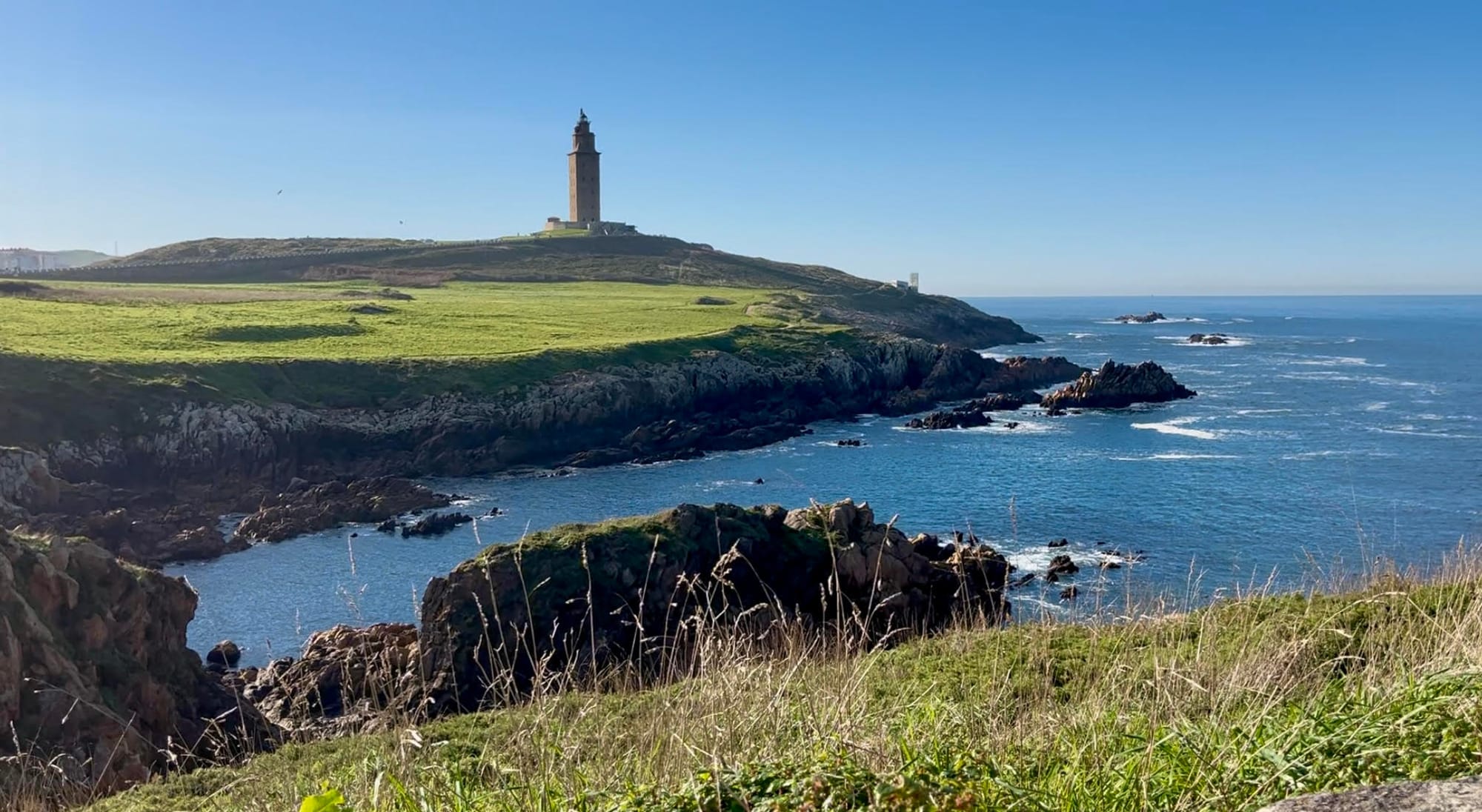
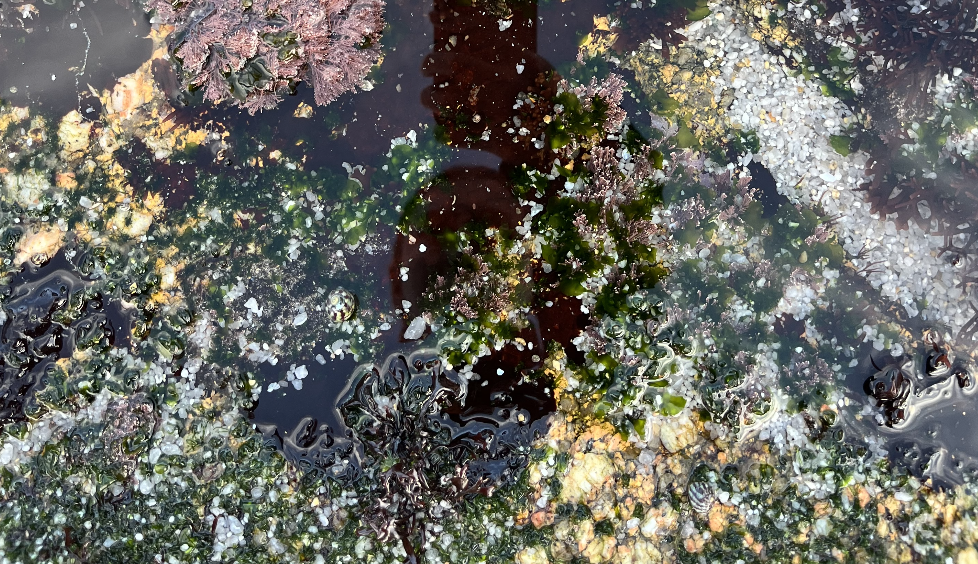
This whole trip has actually made me really homesick because the coast and forests here are super similar to those in NorCal. Pine forests, swooping hills, and cliffs that drop into open ocean. The park where the Tower of Hercules is located kind of reminded me of the Marin Headlands. The water at the beaches was perfectly clear and clean. I went down to the tide pools too see if I could spot any critters. I saw a fish and some clams and barnacles, but that's it. But there was a gorgeous little forest of seaweed and algae. I wish I knew more about seaweed.
Anyway, on my trip I learned two legends about the Tower of Hercules. One is Ancient Greek and one is Celtic. Both are about the tower's creation and significance. There are definitely more folktales and historical events associated with the tower, but these are the ones I learned on that day. I'm just telling them mostly as I remember them, so they are pretty brief and I can't ensure accuracy. But that's ok and I think in the spirit of oral tradition. I will go in chronological order and start with the Ancient Greek origin story of the Tower of Hercules.
Long ago, Hercules was called to the Iberian Peninsula to defeat the giant Geryon. Geyron was a tyrant ruling over the lands between the Duero and the Tagus rivers. The battle lasted for three days and three nights, ending when Hercules chopped off the giant's head.
He buried the head by the ocean, and ordered that a tower be created on top of the giant's skull to celebrate their liberation. The local people obliged, building the Tower of Hercules on the site and the town of A Coruña nearby.
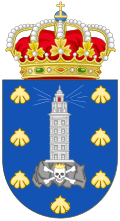
A Coruña's coat of arms features a skull and crossbones symbol at the base of the tower to commemorate this story.
The second story is from Celtic folklore. There is a lot of Celtic and Irish influence here, more than I would have expected. According to people here, and a few quick Google searches, there was a significant Celtic presence here and many modern northern Spanish people have some degree of Celtic genetic ancestry.
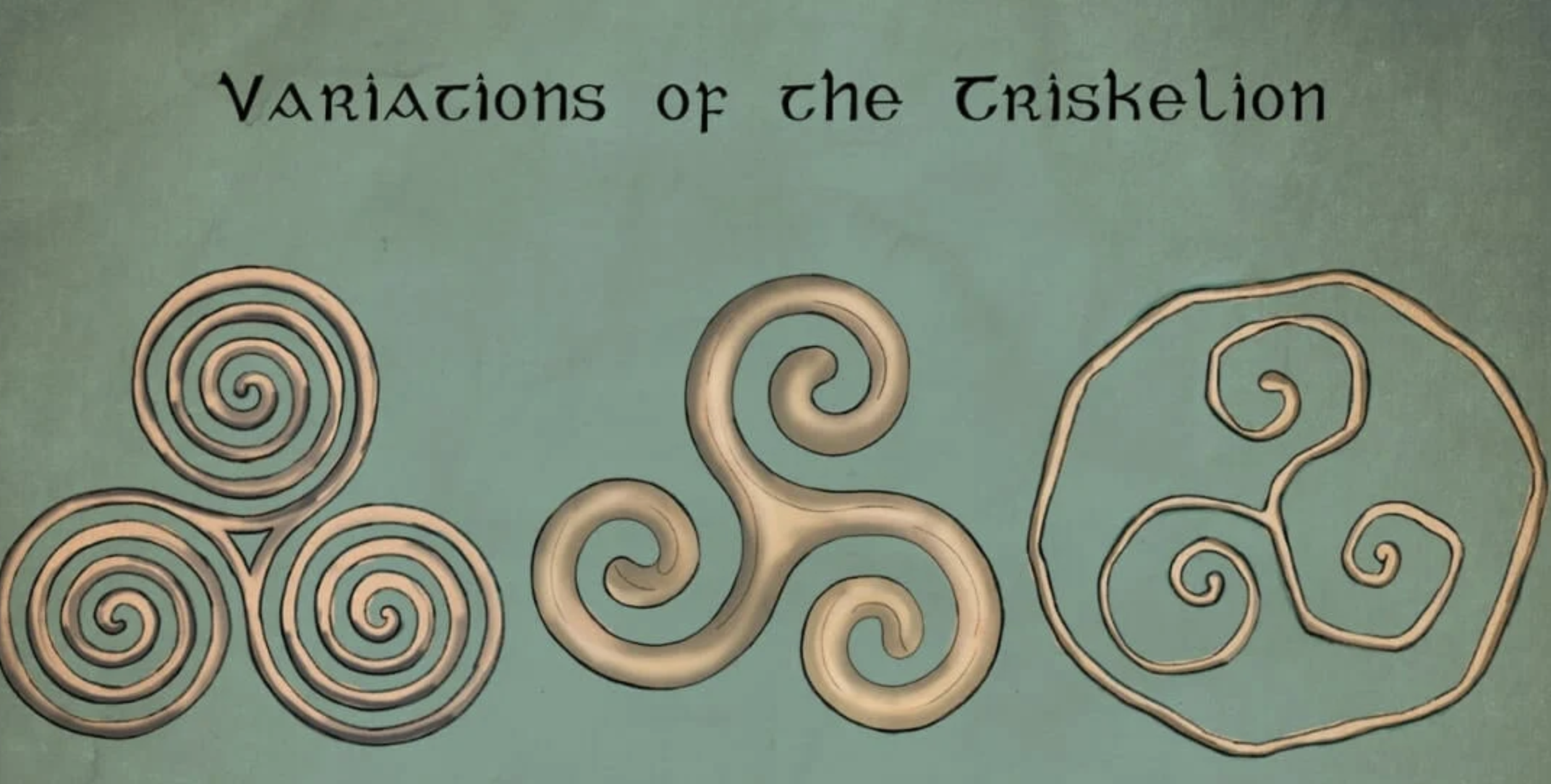
There are a lot of Celtic symbols here, especially one with 3 interlocking spirals that I have just now learned is called a Triskelion. I see it everywhere. Apparently there is also a lot of shared stories and mythology between here and Ireland. I've heard from people here that Galician music and dance is very Celtic in style and sound, like how bagpipes are a popular instrument here.
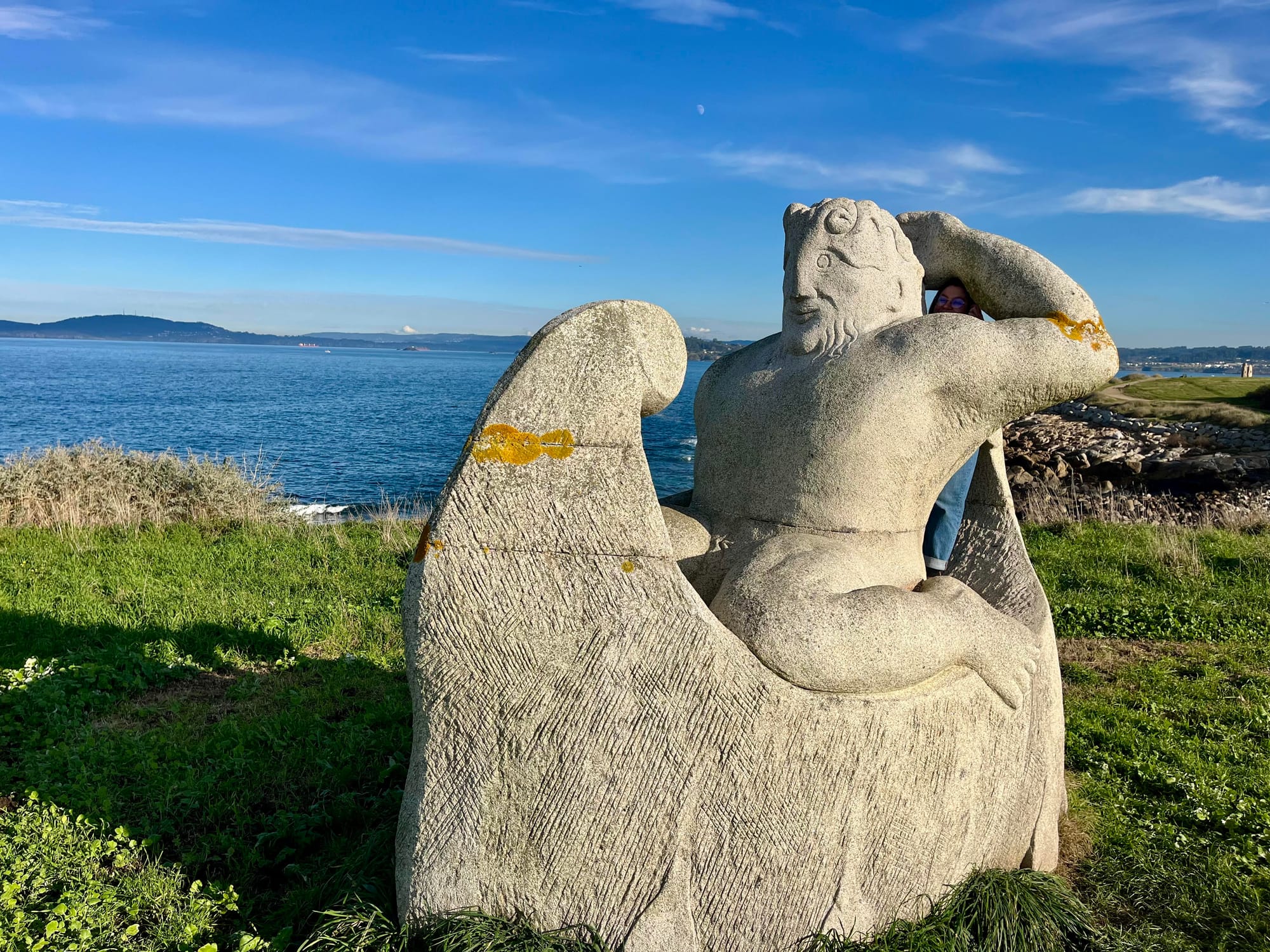
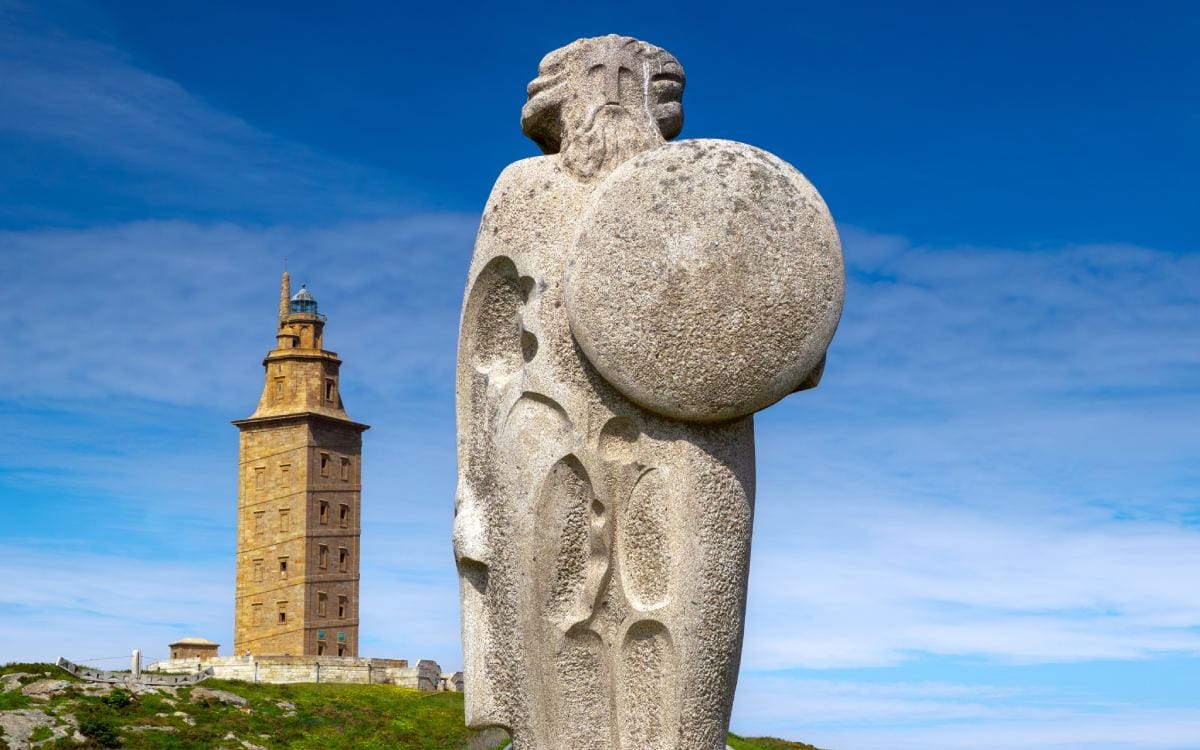
This story is about Breogán, a Celtic hero who appears in both Irish and Galician mythology.
The ancestors of the Irish people had wandered Europe for hundreds of years in search of a home. That changed once the great warrior Breogán became their king. Under Breogán's rule, they conquered a region in Northern Spain which is now Galicia, and founded a settlement that is now the city of A Coruña. Upon their victory, Breogán ordered a tower to be built overlooking the sea. The tower was to be so tall, that one would be able to see faraway green shores of distant lands if they stood on top.
Upon Breogán's death, his son, Ith, climbed the tower and sure enough saw the tips of Ireland's distant green shores. He ordered a voyage to settle it. The mission failed (idk why) and Ith perished at sea.
Ith's son/Breogán's grandson, Lugaidh, carried out the mission in memory of his father, eventually reaching and conquering Ireland. Through this line, Breogán's descendants would become the modern day Irish people.
I think it's kind of unfair that Breogán got a statue and all the attention when Ith and Lugaidh were the ones actually doing the voyages to Ireland, but that's just me. I think local people just refer to it as the story of Breogán, but I think this story should be called Breogán's Tower instead, since that was his actual contribution. But that's just me.
There is one more story of the tower, which is just its historical explanation. But I don't think any less exciting than the myths.
The tower is actually a lighthouse built in 1st century AD by the Romans. Apparently, the strong currents and rocks off the Galician coast are famously dangerous for ships. The lighthouse has been essential to seafarers in the area and in at least semi-continuous use since it was built, which is insane. Because its history and cultural significance, it has been a UNESCO World Heritage site since 2009.
According to Wikipedia, it was designed by architect Caius Sevius Lupus and was based on the design of the Lighthouse of Alexandria. It is dedicated to the war god, Mars. Which makes sense, since it was likely often used by Roman naval fleets coming in to dock at the naval base. There is significant archeological evidence pointing to heavy Roman military presence in the area, and it would have been an important military base given its proximity to the British Isles and Iberian Atlantic coast. Rumor had it that Julius Caesar liked to hang out there during his reign, but this has never been confirmed.
It is hard to fully comprehend just hold old this structure is. And how many layers of history and culture and stories it represents. Like it's both a Celtic and Greek mythological site. That's crazy to me for some reason. I'm not really clear on the timeline of all of it, since as the lighthouse was built by the Romans, but both Greek and Celtic civilization and stories would predate that. So I'm not sure if maybe there has always been some sort of tower or lighthouse structure on that site and whatever was there before was just replaced by this "modern" Roman version, or if those stories were created by the descendants of the Greeks and Celts and were just attributed to their ancient ancestors in retrospect. I guess it doesn't really matter at the end of the day.
I think that's been one of my favorite things about being in Europe is just how ancient recorded history can get and how that history is still physically visible. Like in terms of the Tower of Hercules, a piece of ancient history is present infrastructure. And history is interactive, it's still a lighthouse, and it's still a local landmark. The Roman Empire isn't as much of a distant concept out of a history concept when you're staring at something that came from it.
And maybe because of that visibility, or maybe there's a cultural aspect as well, but I wouldn't know, people here seem really connected to that history. Like the past, and the present, and the mythological don't seem all that far away from each other.
Anyway... It is 3am, and I still can't sleep. I'm going back to Madrid tomorrow. I've had a good time exploring this area and meeting a lot of new people. It was kind of strange for me not to spend Christmas and New Year's Eve with my immediate family, but I have been treated with lots of very generous hospitality here, so that's made up for a lot of it. Happy new year :)